
Every gambler remembers their first bad beat. Maybe it was a river card that gutted your poker hand, or a slot machine that showed three scatters on a bonus you'd already mentally spent. The sting lingers because it feels personal. But here's the uncomfortable truth that separates recreational players from long-term survivors: variance isn't an anomaly. It's the engine of the entire industry. Understanding how it works is the difference between playing with a strategy and playing with hope.
Let's strip away the marketing gloss and talk about what's actually happening under the hood of casinos, sportsbooks, and poker rooms.
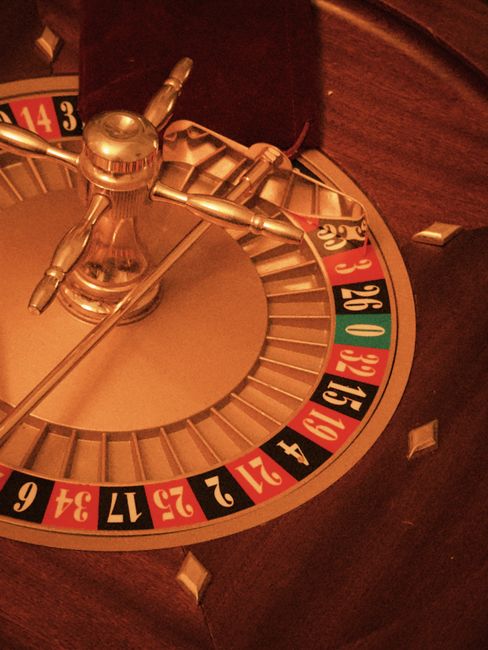
Start with the house edge. Every game you play has one, and it's not a conspiracy. It's the operator's revenue model. In European roulette, the single zero gives the house a 2.7% edge on almost every bet. American roulette doubles the zero and pushes that edge to 5.26%. Over an hour of $10 spins at 60 spins per hour, that's roughly $16 in expected loss on a European wheel versus $31 on an American one. Same game, same excitement, nearly double the bleed.
Slots are trickier because the house edge is baked into the RTP (return to player). A slot with 96% RTP theoretically returns $96 for every $100 wagered over millions of spins. But that 4% edge compounds in ways players rarely feel in a single session. Blackjack, played with basic strategy on a 3:2 table, can drop the house edge below 0.5%. Play the same game badly on a 6:5 payout table, and you've handed the casino a 2% edge before you even sit down.
The point isn't to scare you off. It's this: choose your games with the same care you'd choose a car. The specs matter more than the paint job. You can read more about it on xoilac.
Poker sits in a strange category. You're not playing against the house; you're playing against other humans, and the house just takes a rake. That fundamental difference changes everything about strategy.
In poker, the house edge is fixed and small (typically 5% of the pot, capped). The variable is your opponent. A skilled player at a soft table can sustain a win rate of 5 to 10 big blinds per 100 hands. A losing player loses roughly the same. Over 10,000 hands, that gap becomes a mortgage payment.
But here's what trips people up: even a winning player can lose for months. Poker variance is brutal because the edges are thin and the sample sizes are small. A 5bb/100 winner might have 20,000-hand downswings. This is why bankroll management isn't optional advice — it's survival. The standard rule is 20 buy-ins for cash games, or 100 buy-ins for tournaments. If you're playing $1/$2 no-limit with a $2,000 bankroll, you're one bad weekend from tapping out.
Nobody beats slots long term. Full stop. The RTP guarantees it. But you can be smarter about how you play them.
First, know your volatility. Low-volatility slots like Starburst pay frequently but small — good for stretching a session. High-volatility monsters like Bonanza or San Quentin can go hundreds of spins without a meaningful hit, then pay 1,000x. If you're playing high-volatility slots on a $50 bankroll, you're donating. Match your bankroll to the volatility or pick a different game.
Second, ignore the 'hot' and 'cold' machine myth. Modern slots use random number generators. The machine that just paid a jackpot isn't 'due' or 'drained.' Each spin is independent. Casinos love this myth because it keeps players glued to a seat.
Third, understand bonus terms. A 100% match bonus with 40x wagering on slots means you need to wager $4,000 to clear a $100 bonus. If the slot has 96% RTP, your expected loss on that wagering is $160. The bonus is worth less than it looks. Always read the fine print — game weighting, max bet rules, and time limits can kill an otherwise good offer.
Sports betting feels like it should be beatable with knowledge, and for a tiny percentage of bettors, it is. Closing line value (CLV) is the sharpest metric: if you consistently bet lines that move in your favor before kickoff, you're probably profitable long term.
The rest of us need to respect the vig. A standard -110 line means you need to win 52.4% of bets just to break even. That's not a coin flip; it's a coin flip with a tax. Parlays multiply the edge against you. A three-leg parlay at -110 each leg has a house edge of roughly 12.5%. They're fun, but they're not an investment strategy.
Live betting is where recreational players often get destroyed. The lines move fast, emotions run high, and the book's margin on in-play markets is wider. If you're going to bet live, pick one market, study it, and don't chase losses.
The iGaming industry is built on a simple truth: most players lose over time, and the few who win do so through disciplined, unemotional decision-making. That doesn't mean you can't enjoy yourself. It means you should walk in with your eyes open.
Set a budget before you log in. Treat it as the cost of entertainment, not an investment. Choose games with lower edges when you can. Track your results honestly — not just the wins. And if you ever feel like you're chasing rather than playing, step away. The house has time. You don't.
Variance cuts both ways. The same randomness that empties your account one night will fill it another. The only thing you control is how much you expose yourself to the swing. Do that well, and you'll outlast 90% of the people sitting next to you.

Hi, my name is Anthony kuber. I am artist and fashion designer.
I love to travel and writing blogging.
Your email address will not be published. Required fields are marked *
Software Developer & Writer
Hey, I'm Diva, a developer and writer blending code and creativity. I'm driven by a deep curiosity and a relentless pursuit of excellence. Join me as I craft digital solutions and captivating stories.


